

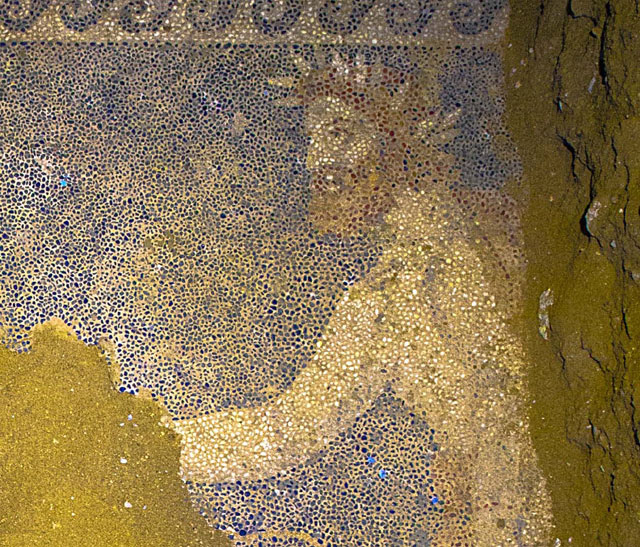
Yesterday the Ministry revealed an amazing mosaic on the floor in front of the main tomb entrance in Amfipoli (http://www.yppo.gr/2/g22.jsp?obj_id=58792).
Studying the pebbled floor leads to some very interesting clues about the resident of the tomb of Ampfipoli:
It appears to be an imitation of a similar mosaic of in the tomb of Persefone in Aegae :
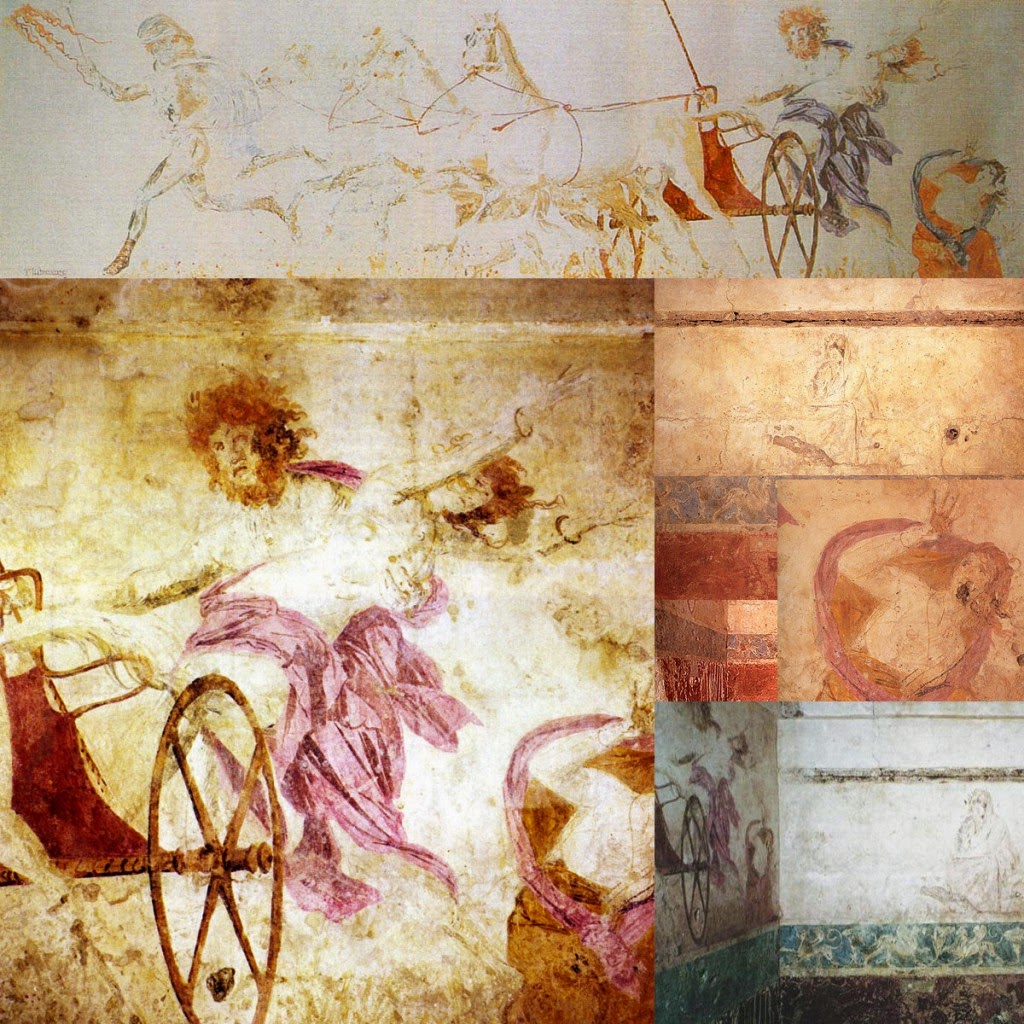
The abduction of Persefone is a recurring mosaic theme in regal tombs. Hermes is shown leading a chariot with two horses being driven by a bearded, partialy revealed, man. The rest of the mosaic is not yet revelead, though it is heavily speculated that on the right part there is a depiction of Persefone. If not, the man could be the resident of the tomb, although unlikely, since mosaics tend to portay the course of the soul in general.
It is speculated that symbols and characteristics of the deseaced will start appearing after the third, or even fourth, chamber, behind the blocked doorway where the mosaic was found. The area of the dead is there, not in the tomb's hallway.
There are other similiraties with mosaics in the palace of Aegae that reinforce the belief that the tomb of Amfipoli is regal!
In particular :
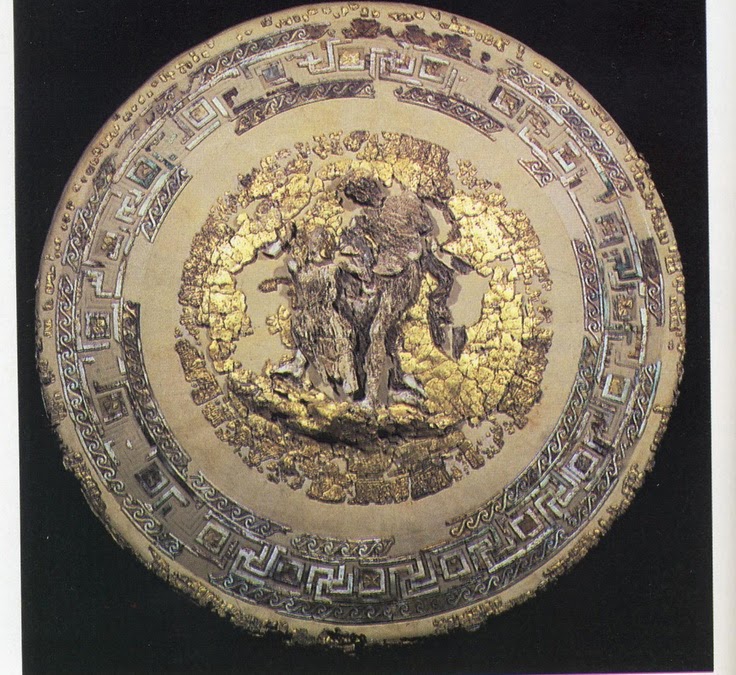
- The mosaic threshold :
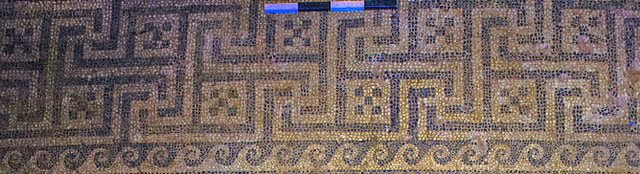
appears in King Philip's shield :
as well as in the Palace of Aegae :

Besides the threshold, there are other common features with the one in Amfipoli:
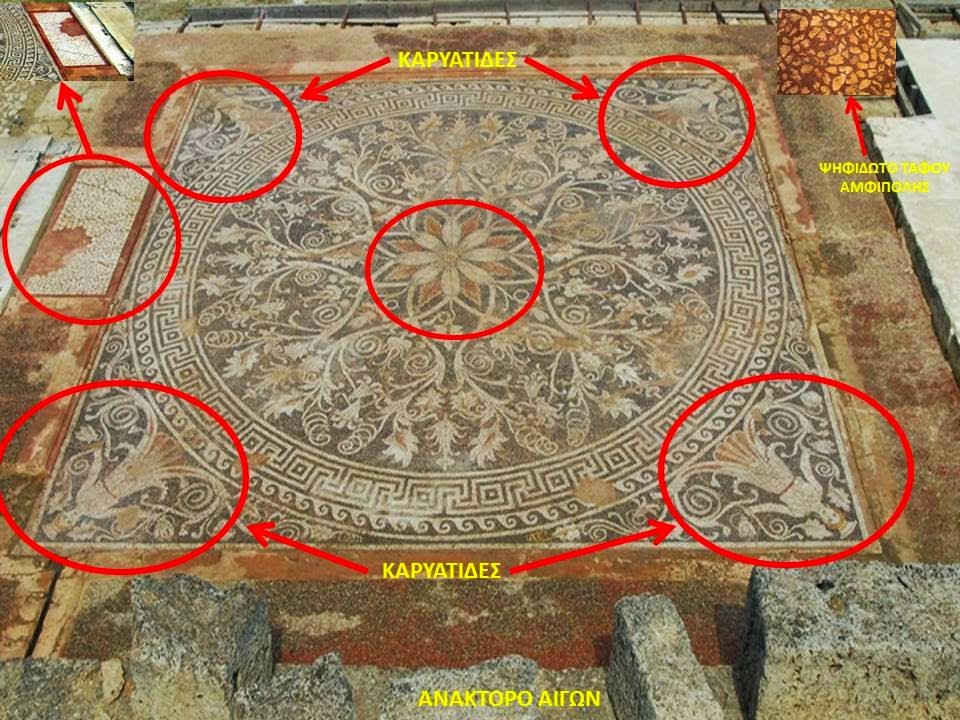
- The eight-leafed rosette (in the middle of the mosaic)
- The Caryatids (in the four corners of the mosaic)
- The marble floor (in the left side of the image)
Even the progression to the inner of the tomb bears similarities. Like in Amfipoli, marble floor covers the entrance, where the Caryatids are the first to appear. After the tomb's hallway comes the main tomb area. The symbols and pieces of art serve to show the course of the soul, that comes from the world of birth and ascends to deit.y
All these indicate that the monument is an unsullied, regal and Macedonian tomb.